

Hey there! As a supplier of M12 Vent Plugs, I often get asked about how to test the functionality of these little but crucial components. In this blog, I'm gonna share with you some practical ways to test an M12 Vent Plug to make sure it works as it should.
Why Testing M12 Vent Plugs Matters
Before we dive into the testing methods, let's quickly talk about why testing these vent plugs is so important. M12 Vent Plugs are used in a wide range of applications, from industrial machinery to electronic devices. Their main job is to allow air to flow in and out while keeping dust, water, and other contaminants out. If a vent plug fails to do its job, it can lead to all sorts of problems, like moisture buildup inside equipment, which can cause corrosion and damage to sensitive components. So, making sure your M12 Vent Plugs are working properly is essential for the reliability and longevity of your products.
Visual Inspection
The first and easiest test you can do is a visual inspection. Start by looking at the vent plug itself. Check for any obvious signs of damage, such as cracks, chips, or deformities. A damaged vent plug might not be able to provide a proper seal or allow for the right amount of airflow. Also, make sure the threads are in good condition. If the threads are stripped or damaged, the plug won't fit properly into the housing, which can lead to leaks.
Another thing to look for is the presence of any debris or blockages in the vent. Sometimes, dirt or other particles can get stuck in the vent, preventing air from flowing through. You can use a magnifying glass to get a closer look at the vent opening and check for any signs of blockage. If you see any debris, you can try gently blowing on the vent or using a soft brush to remove it.
Airflow Test
Once you've done a visual inspection and everything looks okay, it's time to test the airflow. One simple way to do this is to use a small piece of paper or a tissue. Hold the paper or tissue close to the vent opening and blow gently on the other side of the plug. If the plug is working properly, you should see the paper or tissue flutter as air passes through the vent.
For a more accurate airflow test, you can use a flow meter. A flow meter measures the volume of air flowing through a given area over a specific period of time. To use a flow meter, you'll need to connect it to the vent plug using a suitable adapter. Then, turn on the flow meter and record the airflow rate. Compare the measured airflow rate to the manufacturer's specifications to make sure the plug is within the acceptable range.
Water Resistance Test
Since one of the main functions of an M12 Vent Plug is to keep water out, it's important to test its water resistance. There are a few different ways to do this. One method is the immersion test. Fill a container with water and submerge the vent plug in the water for a certain period of time, usually around 30 minutes. After the immersion period, remove the plug from the water and dry it off. Then, check for any signs of water inside the plug or the housing it's installed in.
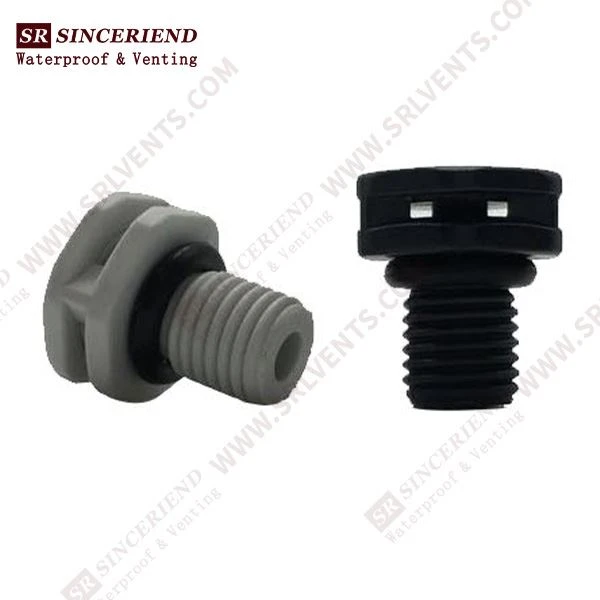

Another way to test water resistance is the spray test. Use a spray bottle filled with water to spray the vent plug from different angles. Make sure to apply the spray with enough pressure to simulate real-world conditions. After spraying, check for any water penetration. If there's no water inside the plug or the housing, then the plug has passed the water resistance test.
Dust Resistance Test
In addition to water resistance, M12 Vent Plugs also need to be resistant to dust. To test dust resistance, you can use a dust chamber. A dust chamber is a sealed container filled with a specific type of dust. Place the vent plug inside the dust chamber and expose it to the dust for a set period of time, usually a few hours. After the exposure period, remove the plug from the dust chamber and carefully clean it. Then, check for any dust particles inside the plug or the housing. If there are no dust particles present, the plug has passed the dust resistance test.
Pressure Test
Some applications may require the M12 Vent Plug to withstand a certain amount of pressure. To test the pressure resistance of the plug, you can use a pressure chamber. Connect the vent plug to the pressure chamber and gradually increase the pressure inside the chamber to the specified level. Hold the pressure for a certain period of time, usually a few minutes. Then, check for any signs of leakage or damage to the plug. If the plug can maintain the pressure without leaking or getting damaged, it has passed the pressure test.
Temperature Test
Temperature can also affect the performance of an M12 Vent Plug. To test the plug's performance at different temperatures, you can use a temperature chamber. Place the vent plug inside the temperature chamber and set the chamber to the desired temperature range. Let the plug sit in the chamber for a few hours to allow it to reach thermal equilibrium. Then, perform the airflow, water resistance, and other tests as described above. Compare the test results at different temperatures to make sure the plug performs consistently across the expected temperature range.
Compatibility Test
Finally, it's important to test the compatibility of the M12 Vent Plug with the housing it's going to be installed in. Make sure the plug fits properly into the housing and forms a tight seal. You can use a torque wrench to tighten the plug to the recommended torque value. Then, perform the airflow, water resistance, and other tests to make sure the plug and the housing work together as intended.
Conclusion
Testing the functionality of an M12 Vent Plug is crucial to ensure its performance and reliability. By performing a visual inspection, airflow test, water resistance test, dust resistance test, pressure test, temperature test, and compatibility test, you can make sure your M12 Vent Plugs are working properly and meeting the requirements of your application.
If you're in the market for high-quality M12 Vent Plugs or need more information about testing and using them, don't hesitate to reach out. We also offer a wide range of other protective vents, such as M12x1.5 Protective Vents, M6 0.75 Protective Vents, and Breather Plug. Contact us today to discuss your specific needs and let's work together to find the best solutions for your products.
References
- Manufacturer's documentation for M12 Vent Plugs
- Industry standards for vent plug testing